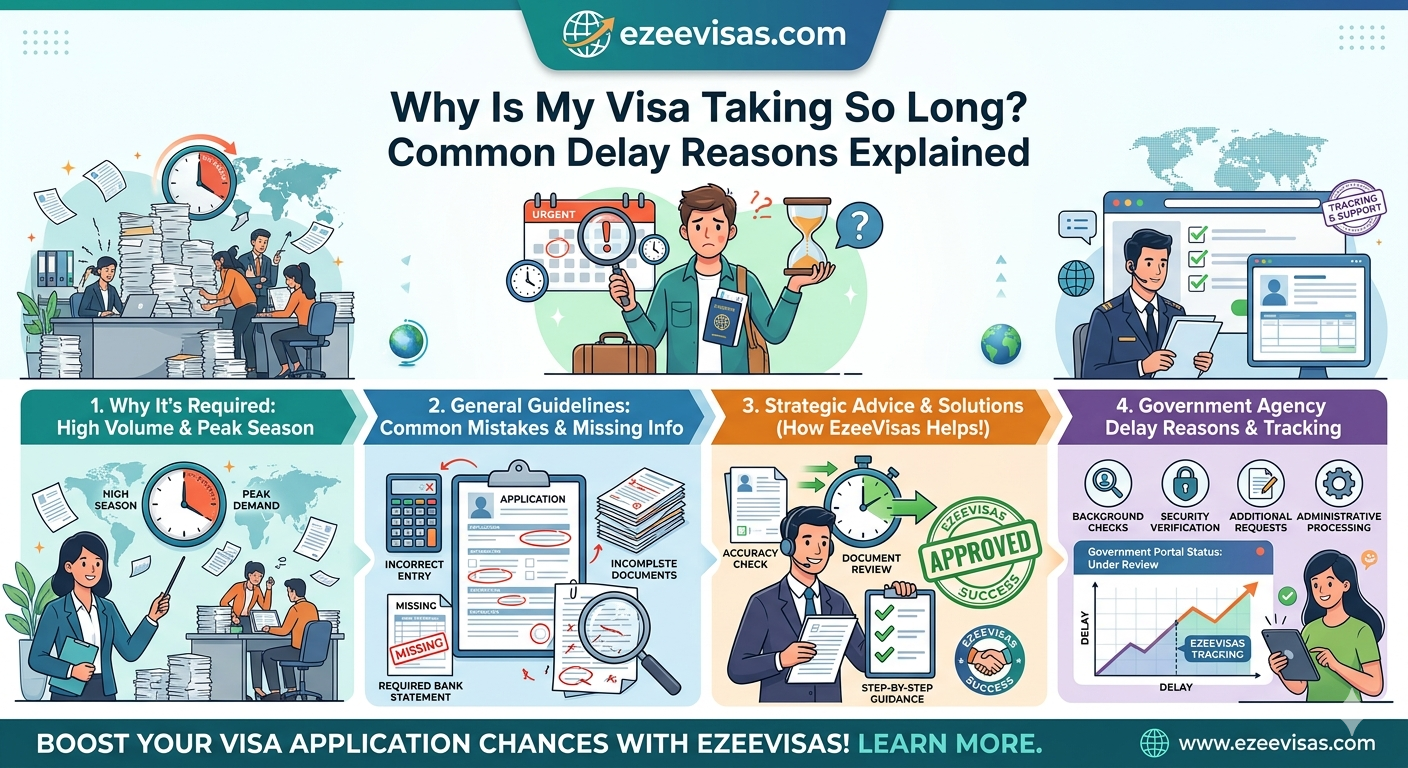
If you’re anxiously checking your email and wondering why your application hasn’t moved forward, you’re not alone. Understanding visa delay reasons can help reduce stress and give you a clearer idea of what’s happening behind the scenes. While visa processing times vary depending on the country and visa type, delays are more common than most applicants expect.
This guide breaks down the most common causes of delays and what you can do to handle them effectively.
Understanding Visa Processing Timelines
Before diving into specific visa delay reasons, it’s important to understand that visa processing is rarely instant. Each application goes through multiple stages, including verification, background checks, and final approval.
Key Factors That Affect Processing Time
- Type of visa (tourist, student, work, immigration)
- Country of application
- Time of year (peak travel seasons)
- Individual applicant profile
Even if official timelines suggest a few weeks, real-world cases often take longer due to additional scrutiny or administrative backlog.
Top Visa Delay Reasons You Should Know
1. Background and Security Checks
One of the most common visa delay reasons is extended background screening.
Why It Happens:
- Verification of criminal records
- Cross-checking international databases
- National security concerns
Impact:
These checks can add weeks—or even months—to your processing time, especially if your name matches someone in a global database.
2. Incomplete or Incorrect Documentation
Missing or incorrect documents are a major cause of delays.
Common Issues:
- Missing financial proof
- Incorrect application forms
- Expired or invalid documents
How to Avoid It:
Double-check all paperwork before submission and follow embassy guidelines carefully. Even a small mistake can push your application back significantly.
3. High Embassy Workload
Embassies and consulates often deal with thousands of applications daily.
When Delays Are Most Likely:
- Summer travel season
- University admission periods
- Holiday seasons
Result:
Applications may sit in queues longer than expected, even if everything is in order.
4. Administrative Processing
Sometimes applications are flagged for additional internal review.
What This Means:
- Extra verification of your purpose of travel
- Review of supporting documents
- Internal embassy procedures
This is one of the more unpredictable visa delay reasons, as timelines are not always disclosed.
5. Interview Scheduling Delays
For visa types requiring interviews, scheduling can slow things down.
Causes:
- Limited appointment slots
- High demand in your region
- Staffing shortages
Tip:
Book your interview as early as possible to avoid unnecessary waiting time.
6. Medical or Additional Requirements
Some visas require medical exams or extra documentation.
Examples:
- Health screenings
- Police clearance certificates
- Biometrics submission
If these are delayed or incomplete, your visa processing will pause until requirements are fulfilled.
How to Handle Visa Delays Effectively
Understanding visa delay reasons is only half the battle—knowing how to respond is equally important.
Stay Proactive
- Regularly check your application status
- Respond quickly to embassy requests
Contact the Embassy (When Appropriate)
If your application exceeds normal processing time, a polite inquiry can sometimes help clarify the situation.
Avoid Multiple Applications
Submitting duplicate applications can create confusion and further delays.
Plan Ahead
Always apply well in advance of your intended travel date to buffer against unexpected delays.
When Should You Be Concerned?
Not all delays are problematic, but certain signs may require attention:
- No updates for an extended period beyond normal timelines
- Repeated requests for the same documents
- Lack of communication from the embassy
In such cases, seeking professional immigration advice may be helpful.
Final Thoughts
Visa delays can be frustrating, but they’re often part of a thorough and necessary process. By understanding the most common visa delay reasons—from background checks to embassy workload—you can better prepare and avoid unnecessary setbacks.
Patience, preparation, and attention to detail are your best tools for navigating the visa process smoothly.
FAQs About Visa Delay Reasons
How long do visa delays usually last?
It depends on the cause. Some delays take a few days, while others—like security checks—can take several weeks or months.
Can I speed up my visa processing?
In most cases, no. However, ensuring complete documentation and timely responses can prevent additional delays.
Do visa delays mean rejection?
Not necessarily. Many delays are procedural and do not indicate a negative outcome.
By staying informed and prepared, you can reduce stress and improve your chances of a smooth visa approval process.