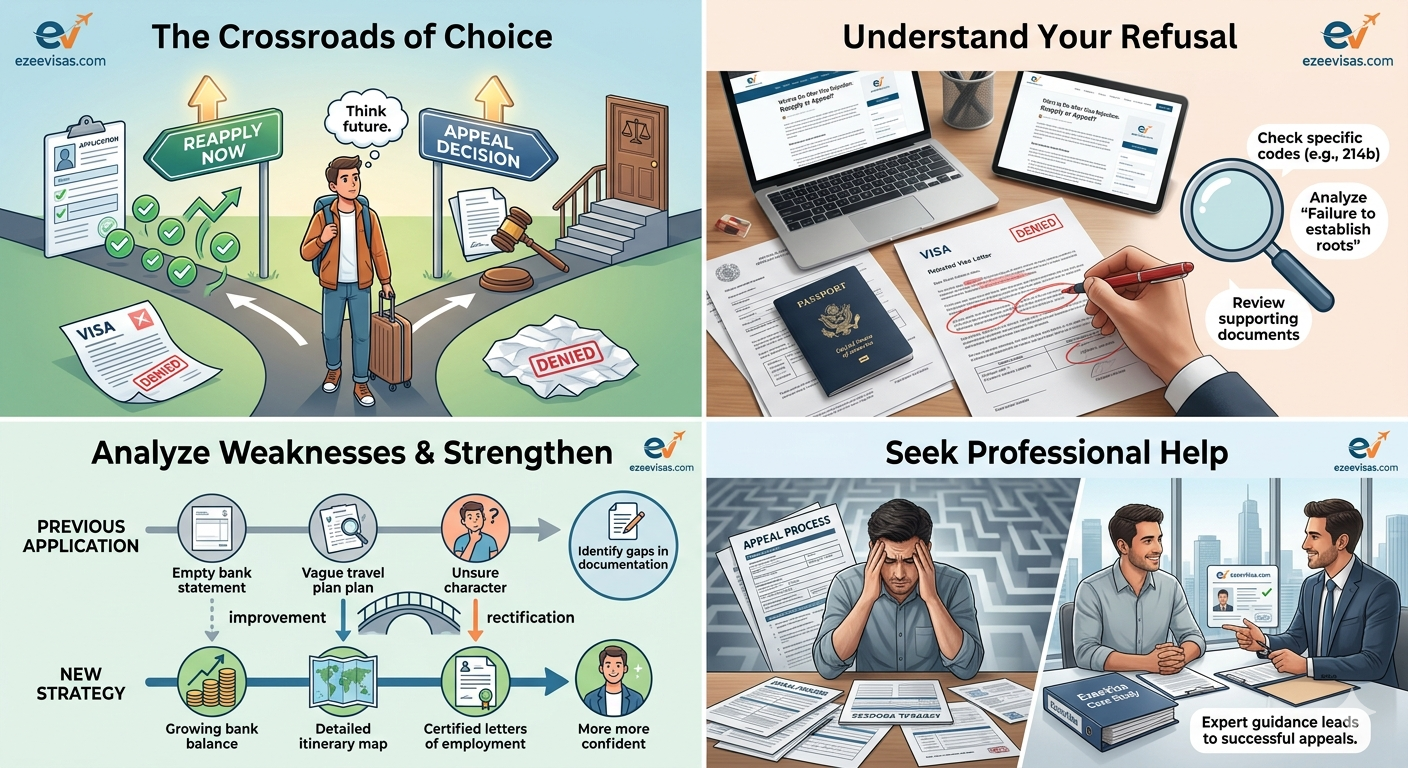
Getting a visa rejection can feel discouraging—but it’s not the end of your journey. Many applicants successfully secure their visas after taking the right steps. If you're wondering what to do after visa rejection, this guide will walk you through your options, including whether to reapply or file an appeal, and how to improve your chances next time.
Understanding Why Your Visa Was Rejected
Before deciding your next move, carefully review the rejection letter. Visa officers usually provide reasons such as:
- Incomplete documentation
- Insufficient financial proof
- Lack of strong ties to your home country
- Suspicions about travel intent
- Previous immigration violations
Pro Tip: Never rush into reapplying without understanding the exact reason for rejection.
Reapply or Appeal: Which Option Is Better?
1. When to Reapply
Reapplying is often the best option if:
- You can fix the issues mentioned in the rejection
- You submitted incorrect or incomplete documents
- Your financial or personal situation has improved
Benefits of Reapplying:
- Faster process compared to appeals
- Greater control over your application
- Opportunity to submit stronger evidence
2. When to Appeal
Appealing is suitable if:
- You believe the decision was unfair or incorrect
- You have strong evidence that was overlooked
- The visa type allows formal appeals (not all do)
Things to Know About Appeals:
- Appeals can take weeks or even months
- Requires detailed legal or procedural understanding
- Often involves additional fees
Step by Step: What to Do After Visa Rejection
Step 1: Analyze the Rejection Letter
Identify the exact reasons and categorize them (financial, documentation, intent, etc.).
Step 2: Gather Strong Supporting Documents
Prepare updated and accurate documents such as:
- Bank statements
- Employment letters
- Invitation letters (if applicable)
- Travel itinerary
Step 3: Address Weak Points
If your ties to your home country were questioned:
- Show job stability
- Provide property ownership proof
- Include family commitments
Step 4: Write a Strong Cover Letter
Clearly explain:
- What went wrong previously
- What has changed
- Why you meet all visa requirements now
Step 5: Seek Professional Advice (Optional)
Immigration consultants or legal experts can help you avoid repeated mistakes.
Expert Tips to Improve Visa Approval Chances
✔ Be Honest and Transparent
Never provide false information—it can lead to long-term bans.
✔ Double-Check Documentation
Ensure everything is complete, consistent, and up to date.
✔ Demonstrate Strong Intent
Clearly show your purpose of travel and plans to return.
✔ Apply at the Right Time
Avoid rushing—take time to strengthen your profile.
✔ Stay Confident During Interviews
If your visa requires an interview, clarity and confidence matter.
Common Mistakes to Avoid
- Reapplying immediately without changes
- Ignoring the rejection reason
- Submitting fake or misleading documents
- Writing vague or generic cover letters
FAQs About Visa Rejection
Can I apply again after visa rejection?
Yes, you can reapply anytime unless stated otherwise—but only after addressing the issues.
Does visa rejection affect future applications?
It can, but proper corrections and transparency can improve your chances.
How long should I wait before reapplying?
There’s no fixed time, but it's best to wait until you’ve significantly improved your application.