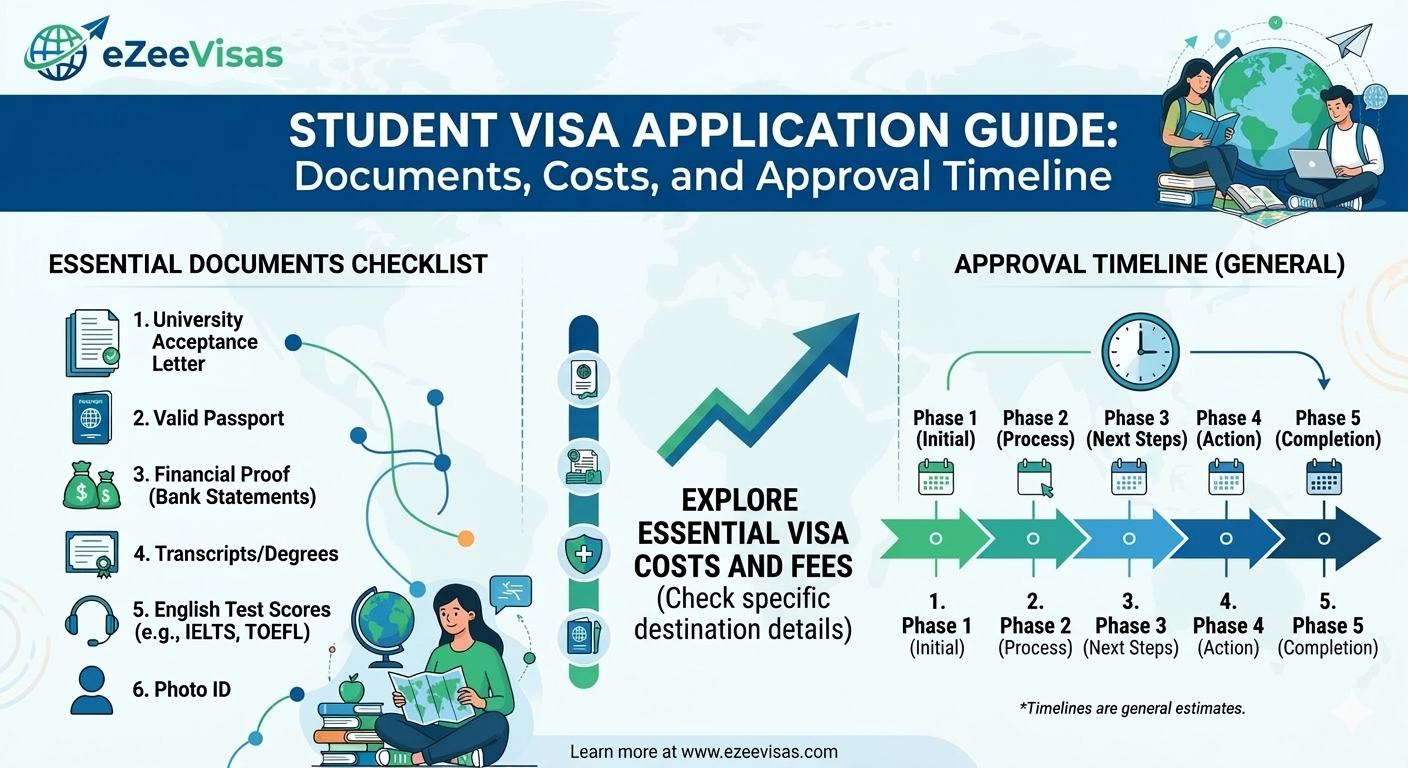
Studying abroad is a life-changing opportunity, but the visa process can feel complicated for many students. Understanding the student visa application requirements is the first step toward a successful application. From gathering documents and proving financial support to preparing for interviews and understanding processing timelines, each step plays an important role in getting approval.
This comprehensive guide explains the requirements for popular study destinations, required documents, expected costs, and tips to increase your chances of visa approval.
What Is a Student Visa?
A student visa is an official authorization issued by a country that allows international students to enter and study at an approved institution for a specific period.
Popular destinations offering student visas include:
- United States
- Canada
- United Kingdom
- Australia
- Germany
Each country has slightly different visa policies, but most share similar documentation and financial proof requirements.
Student Visa Application Requirements
Although requirements vary by country, most international student visas require the following core documents.
1. Valid Passport
Your passport must:
- Be valid for at least 6 months beyond your study period
- Contain blank pages for visa stamping
If your passport is near expiry, renew it before applying.
2. University Acceptance Letter
Students must present an official admission letter from a recognized institution.
Examples include:
- Designated Learning Institution (DLI) acceptance in Canada
- I-20 form for universities in United States
- Confirmation of Acceptance for Studies (CAS) in United Kingdom
This document confirms:
- Your course
- Study duration
- Tuition fees
3. Proof of Financial Support (Bank Statements)
Most countries require proof that you can cover:
- Tuition fees
- Living expenses
- Travel costs
Common financial documents include:
- Bank statements (last 6–12 months)
- Education loan approval letters
- Scholarship letters
- Sponsor affidavits
Example financial requirements:
4. English Language Test Scores
Most universities and immigration offices require English proficiency tests such as:
Typical score requirements:
- Undergraduate: IELTS 6.0 – 6.5
- Postgraduate: IELTS 6.5 – 7.0
5. Academic Documents
Students must provide verified educational records including:
- High school certificates
- Bachelor’s degree transcripts
- Mark sheets
- Academic references
Some countries may require credential evaluations.
6. Statement of Purpose (SOP)
An SOP explains:
- Why you chose the course
- Why you selected that country
- Career goals
- Future plans after graduation
A strong SOP helps immigration officers understand your genuine study intent.
7. Medical Examination
Countries such as Australia, Canada, and United Kingdom may require:
- Medical fitness tests
- Tuberculosis screening
These tests must be done at approved medical centers.
8. Police Clearance Certificate (PCC)
Some countries require a police clearance certificate to confirm the applicant has no criminal history.
Student Visa Interview Preparation Tips
Some countries like the United States require visa interviews.
Common interview questions
- Why did you choose this university?
- Why do you want to study in this country?
- Who is funding your education?
- What are your plans after graduation?
Tips to succeed
✔ Be honest and confident
✔ Know your course details
✔ Understand your financial documents
✔ Show clear career goals
Strong preparation significantly improves approval chances.
Common Reasons for Student Visa Rejection
Many applications are rejected due to avoidable mistakes.
Major reasons include:
- Insufficient financial proof
- Weak Statement of Purpose
- Incomplete documents
- Poor interview performance
- Lack of genuine study intent
Carefully reviewing student visa application requirements before submission helps avoid these issues.
Tips to Increase Visa Approval Chances
Follow these strategies to improve your application success rate:
- Apply early
- Maintain clear bank statements
- Write a strong SOP
- Provide genuine documents
- Prepare well for interviews
Working with certified education consultants can also help avoid common mistakes.